
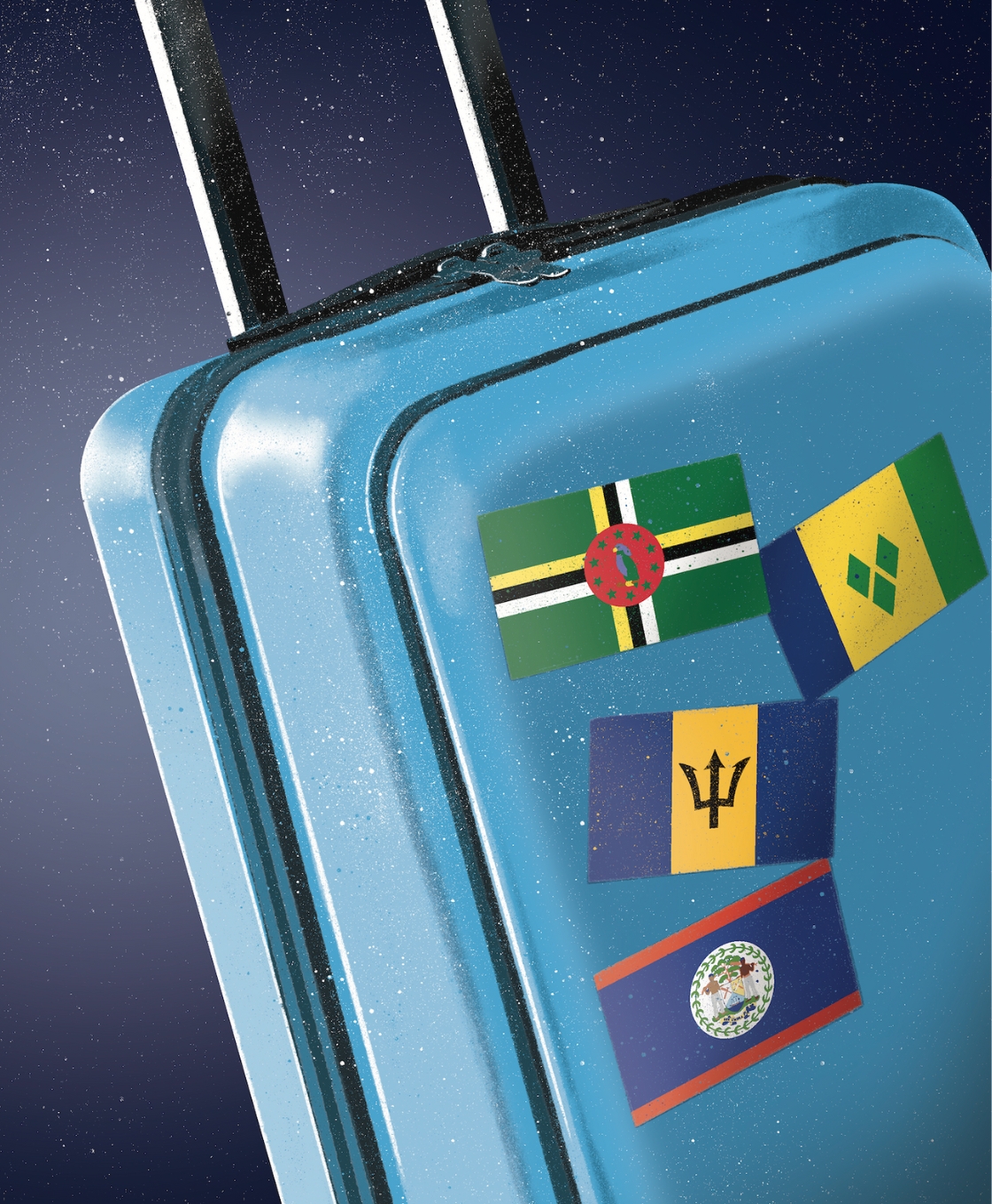
In an era when the tendency of many political leaders is to turn inward, Barbados’ bold decision to adopt a progressive policy of free movement with its Caribbean Community (CARICOM) partners of Dominica, St Vincent and the Grenadines, and Belize, effective October 1, 2025, stands out as a seminal moment in the island’s modern history, second only to its transition to a republic in 2021.
Guided by the forward-thinking leadership of Prime Minister Mia Amor Mottley, Barbados is again demonstrating its preparedness to lead the region through another period of transformation. It could be argued that her decision carries with it some political risks. However, the vision of deeper economic integration, and a recognition that the Caribbean’s strength lies in collaboration, serve to significantly diminish any political uncertainty or peril.
The Caribbean Community (Free Movement of Nationals) Act 2025 provides the legal foundation in Barbados for the initiative. It grants nationals of Belize, Dominica, and St Vincent & the Grenadines the right to live and work indefinitely in any of the four countries without the need for work permits or residence authorisations. But this is part of a broader legislative transformation.
In August 2025, the Government of Barbados introduced two complementary bills: the Barbados Immigration Bill 2025 and the Barbados Citizenship Bill 2025. These are intended to modernise outdated laws and position immigration as a strategic tool for national development.
- The Immigration Bill introduces a points-based system for skilled migration, streamlines permanent residency pathways, and creates new permit categories – “Reside” and “Reside & Work” – to facilitate economic participation.
- The Citizenship Bill expands eligibility to descendants of Barbadians up to great-grandchildren and offers accelerated citizenship pathways for CARICOM nationals after two years of permanent residency. It also enshrines gender equality and explicitly rejects citizenship-by-investment schemes.
Together, these reforms reflect a cohesive national strategy to reverse population decline, close skills gaps, and strengthen Barbados’ competitiveness in a changing global economy. At the time of writing, these Bills are under review by a Joint Select Committee.
For policymakers and business leaders alike, the Act signals a shift from aspiration to implementation. What was once a long-discussed ideal of regional movement has become a reality, even though it does not extend to the entire CARICOM grouping. With it has come a new chapter in Caribbean economic development.

The Arrangement in Practice
For individuals relocating to Barbados under the new regime, the government has outlined clear steps for several key areas.
- Entry: Nationals of the participating countries will be permitted entry on a one-way ticket, reflecting their right to stay indefinitely.
- Employment: Those seeking employment must obtain a National Identification Card and register with the National Insurance & Social Security Service as well as the Barbados Revenue Authority.
- Driving: Valid driver’s licences from home countries will be accepted for up to 12 months or until expiry.
- Education: Dependent children enrolling in local schools must submit education and health records and register with the Ministry of Education.
- Residency: Citizens of Belize, St Vincent and The Grenadines, and Dominica already residing in Barbados before October 1, 2025, will no longer need to apply for extensions of their stay through the Immigration Department.
A reciprocal arrangement ensures that Barbadians will enjoy the same rights and privileges when they choose to live and work in any of the participating nations. This effectively creates a new four-country economic space within CARICOM.
At the heart of Barbados’ rationale is the need to address labour-market gaps. Like many small island economies, we face an ageing population, a low birth rate, and the continued outward migration of many skilled young workers exploring opportunities in developed nations. According to CARICOM statistics, the old-age dependency ratio—measuring the number of people aged 65+ per 100 working-age individuals—is steadily rising. The United Nations projects that the old-age dependency will rise from 14.3% in 2020 to 25.4% by 2050. This trend threatens the sustainability of pension systems, healthcare infrastructure, and labour markets.
By embracing regional free movement, the island can access a broader more diverse Caribbean talent pool, bringing new energy, ideas, and expertise into the economy and the ability to scale operations across borders with greater ease. For employers, this translates to faster recruitment, reduced costs, and a larger base of skilled labour.
Hospitality and tourism represent the anchor of the island’s economy, around which many other subsectors such as construction, agriculture, renewable energy, and information technology thrive and can now gain significantly. Businesses are expected to find it easier to match talent with opportunity and already the open regional market is paying dividends.
For the business community, the free-movement policy also represents a deeper integration of the CARICOM Single Market and Economy (CSME) through enhanced cooperation. By allowing this coalition of member states to move faster toward full economic integration, the four-nation bloc is creating a more unified market of almost 1 million strong.
This approach aligns with the Montevideo Consensus on Population and Development, which advocates for managed migration as a tool for sustainable development. By facilitating intra-regional migration, CARICOM can redistribute human capital where it is most needed, easing pressure on overburdened systems and revitalizing underpopulated areas. Free movement is expected to encourage professionals to stay within the region, contributing to economic activity while remaining close to home. This may prove more appealing at this stage given the less than welcoming environment existing in traditional pull markets.
For our businesses, this translates into a larger and more stable talent pipeline and stronger cultural ties within teams operating across the Caribbean.
Prime Minister Mottley has framed the policy within the broader context of Caribbean resilience. The ability to marshal skilled people quickly across different borders allows the region to better respond to crises.
For companies with regional operations, free movement simply makes it easier to move talent and open offices in the four participating nations. In essence, actioning genuine free movement makes the business environment of the grouping more interconnected.
Public Confidence
Such a major policy shift is not without its sceptics and critics. Some Barbadians worry that greater mobility might alter the social fabric or strain local resources. The government acknowledged these concerns, but it also emphasised that several administrative systems are in place to manage the transition.
Each country retains the right to refuse entry or remove individuals who pose security or public-health risks or are likely to become a burden on public services. Additionally, data-driven monitoring will track migration flows and labour trends, thus ensuring that decisions remain transparent. The CARICOM Implementation Agency for Crime and Security (IMPACS) will play a key role in coordinating this oversight and maintaining regional stability.
Business Opportunities
For Barbados and its partners, the 2025 free-movement initiative is more than a political milestone. It is a strategic business opportunity. It opens new options for trade and investment, while strengthening our competitiveness in a period of increasing uncertainty about the global economy. As the region moves toward full implementation of the CARICOM Single Market and Economy (CSME), the success of this pilot initiative will serve as a blueprint for broader integration. If managed effectively, freedom of movement could become one of the most powerful tools in the Caribbean’s arsenal for sustainable development.
Business Barbados readers, from corporate leaders to entrepreneurs and investors, should view this as an invitation to build partnerships, expand operations, and think regionally. The framework is in place, the policy is live, and the potential is real. The time to invest and innovate is now.
As Prime Minister Mottley remarked, the Caribbean’s future will be defined not by borders, but by bridges.
Latest Edition