%20(300%20%C3%97%20300%20px)-21.avif)
With the formation of the Barbados Industrial Board (forerunner to today’s Export Barbados) in the 1950s, successive Barbados Governments have sought to establish a manufacturing industry in Barbados as a means of diversifying the economy and providing an alternative to agricultural employment within the sugar, molasses and rum industries.
To this end, numerous industrial estates were established, and the Government pursued a policy of ‘Industry by Invitation’ offering tax-free incentives to companies setting up in Barbados.
The initial success of this policy saw rum exports at just $3.5 million in 1980, which lagged far behind exports of sugar, molasses, margarine, food & beverages, chemicals, electrical components, clothing and even sports equipment. However, by 2005, rum surpassed the shrinking sugar industry and by 2010 rum exports had reached $66.8 million and surpassed all of those hitherto mentioned categories, several of which have failed completely. This was achieved without any incentive from Government. Barbados Rum is a success story against the odds.
Rum’s success finally earned attention but, regrettably, the approach is little different to the approach to the sugar industry for the last 50 years. Government remains largely fixated on rum as a generic commodity. Like sugar, to be expanded by volume expansion. Every purported solution to the declining sugar industry over the last 50 years was simply more of the same, whether it was commodity ethanol or more recently commodity electricity. If we had cultivated value-added industries 50 years ago, those nascent industries might be rewarding our economy today. Sadly, we chased one panacea after another. It is imperative that we do not make the same mistake in rum.
The One Billion Dollar Fallacy
Regrettably, recent claims that we can build a one billion dollar business in bulk commodity rum exports inevitably attracted (and distracted) our Government. The sole advocate of this neocolonial business model claimed that “the contribution of rum to the Barbados economy could leap from the estimated $80 million currently, to reach $1 billion by 2030”.
The fact is a one billion dollar bulk trade led rum industry is no more realistic than a one billion dollar commodity raw sugar export industry. Our lone bulk export distillery would have to grow in size by a factor of twenty. It would be the biggest distillery ever built and would have to produce single-handedly a volume that is almost half the output of Scotland where there are 152 distilleries. Barbados currently produces less than 10% of the molasses required and so more than 99% of the molasses for a one billion bulk rum industry would need to be imported. Nominal exports are not net income.
Neither the production capacity nor the infrastructure exists to support such an industry. The net margins from bulk are so low that the net benefit to the Island after infrastructure investment would be marginal. Moreover, exactly like the sugar industry, bulk products are commodities, and demand can be impacted by external factors such as fuel costs or unexpected hazards like tariffs. Bulk commodity exports are not robust exports.
There is no successful spirits industry that is led by bulk exports. Bulk rum is nothing more than a colonial legacy.
The Route to a One Billion Dollar Rum Industry
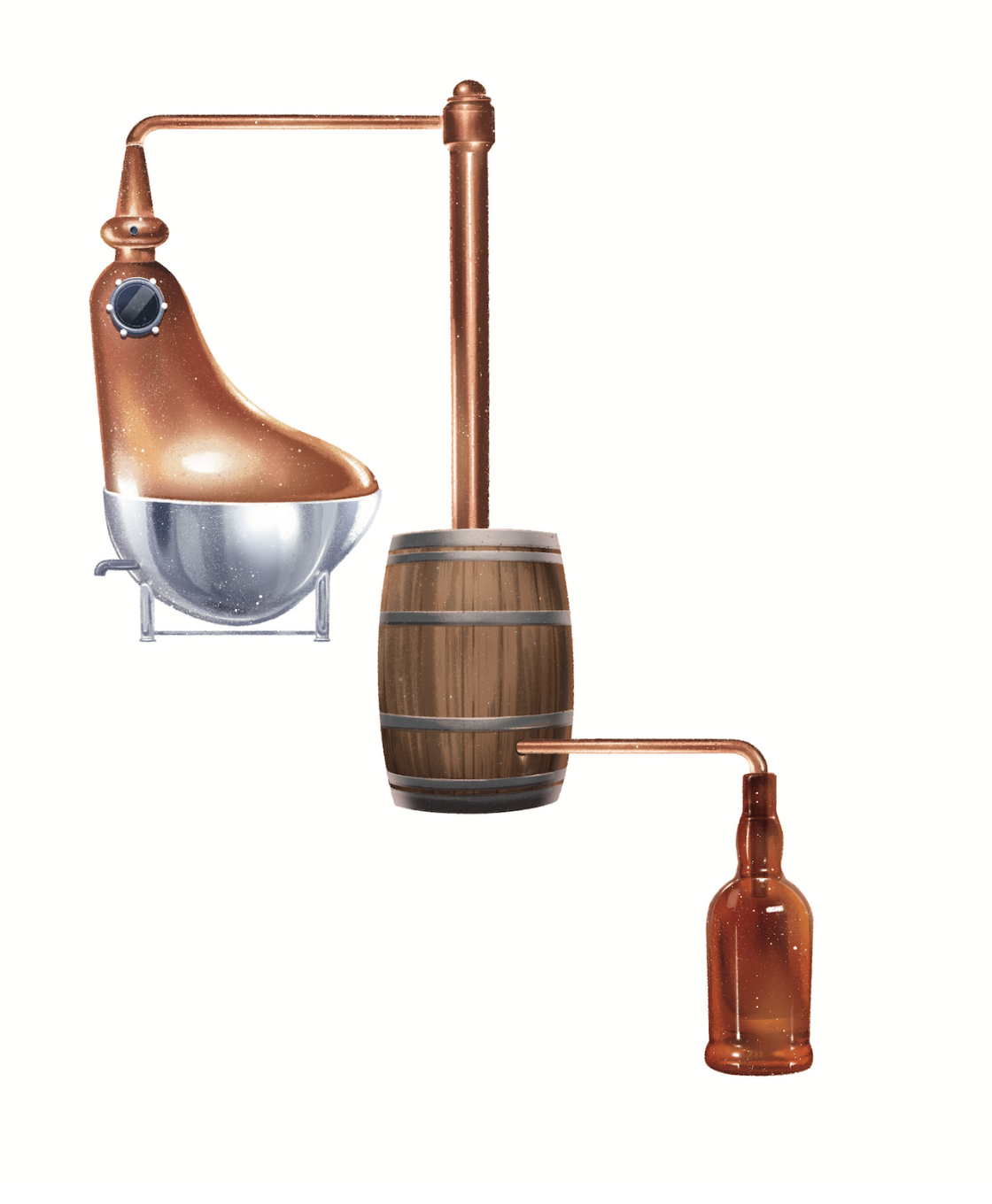
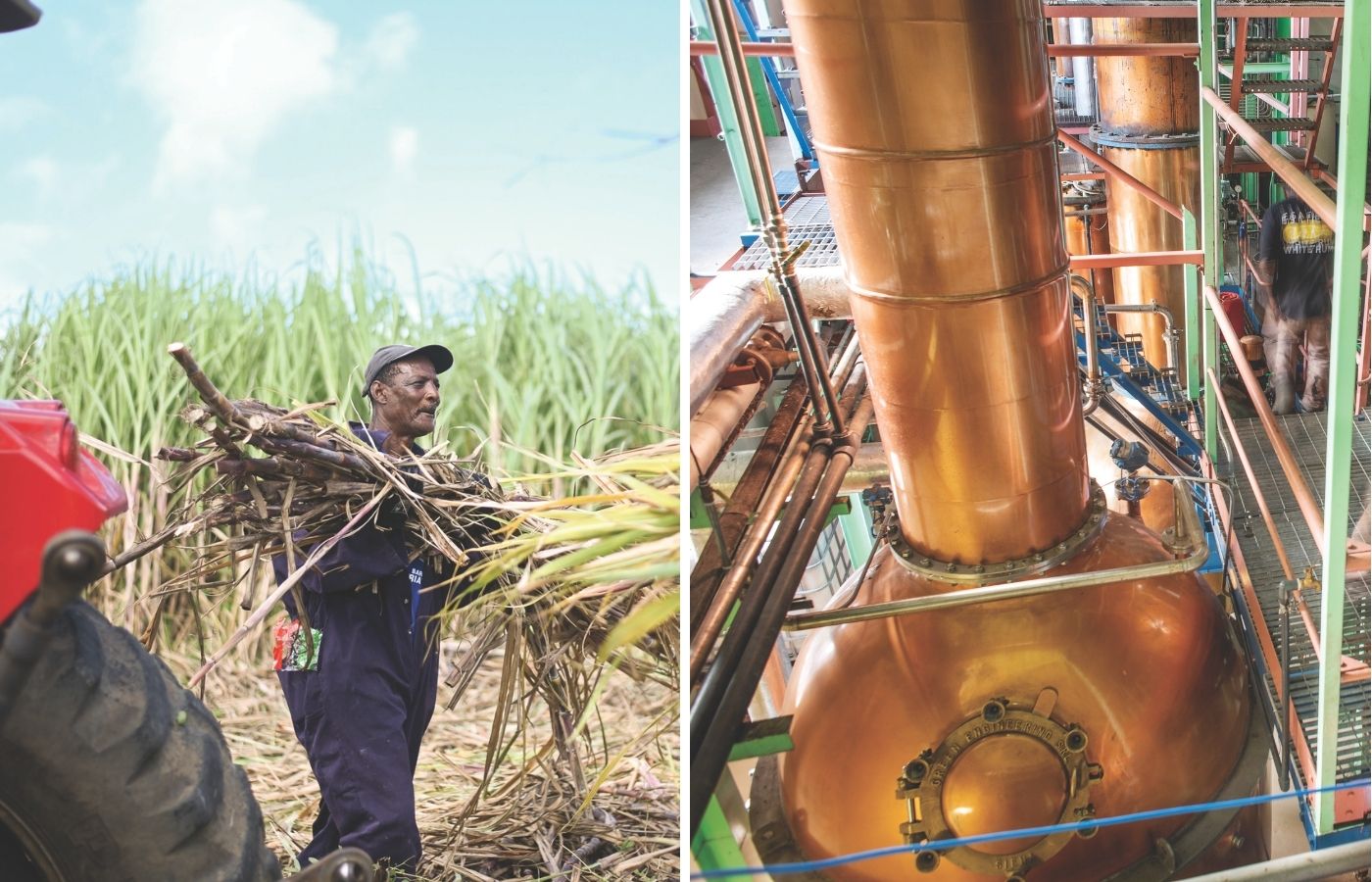
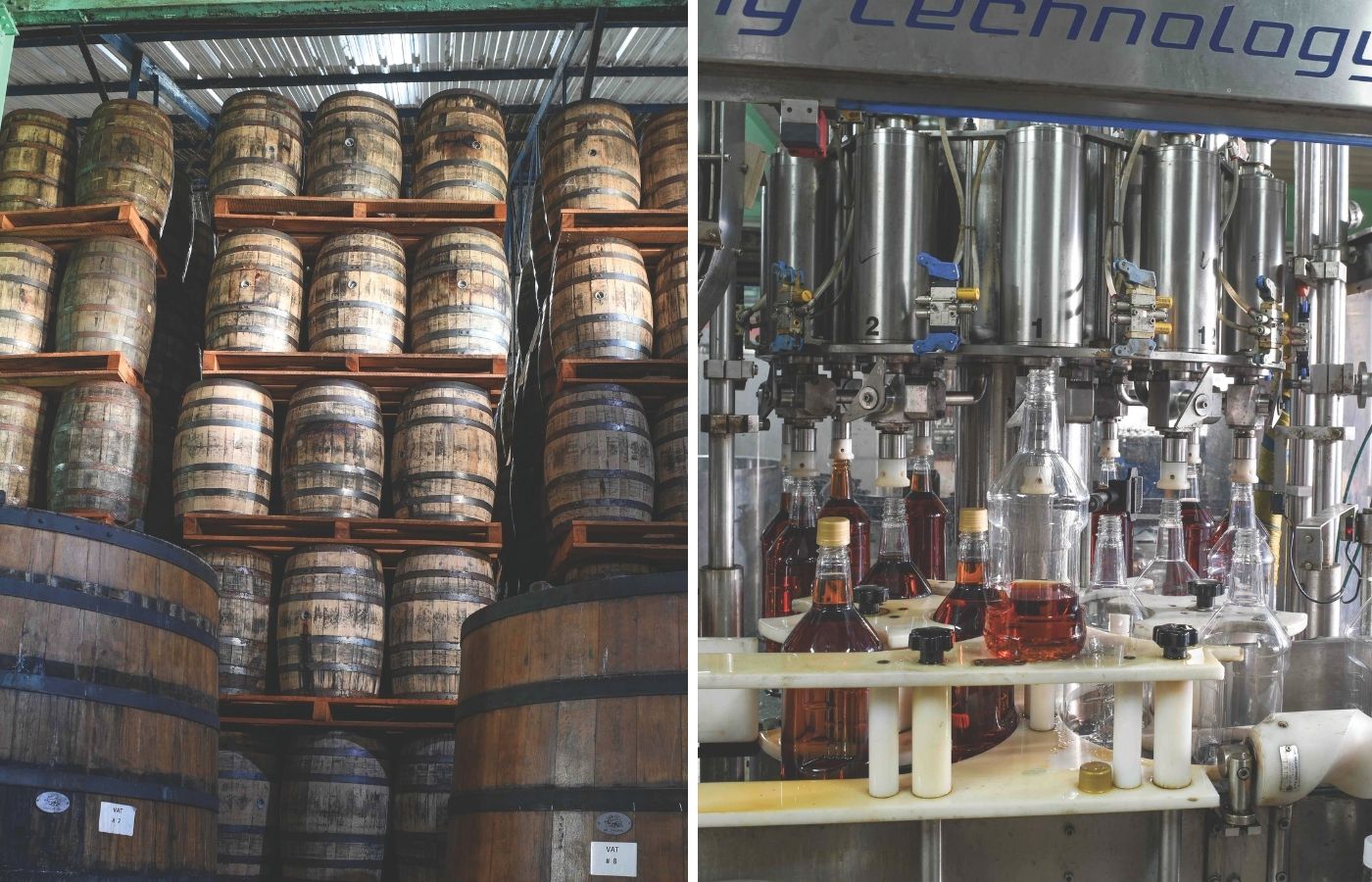
The route to a one billion dollar industry is via the development of value-added rum exports. Rather than focus entirely on the nominal value of exports, we should be looking to create an industry that delivers an economic contribution of one billion to our GDP. Value-added, branded rum exports bottled in Barbados supports local agriculture (to grow the cane) as well as multiple support industries, including production of packaging materials,
The Scotch Whisky Industry exports £5.4 billion per year and is estimated to contribute £7.1 billion to gross value-added to the UK economy. To do this it has £41.5 billion in maturing whisky stock in 22 million casks. While the industry employs more than 41,000 people, it is thought that over 25,000 jobs across the UK are supported by the Industry. It attracts more than 2 million visitors and the synergy between rum and our tourism business should be patent.
The spirits industry is a long horizon business which requires not only investment in production capacity but in maturing stock. It is not a question of simply doing better marketing, you need to have the maturing stock to sell. Growth of sales can only happen against a growth in reserves.
To develop and expand our industry, you cannot change our globally recognised artisanal producers into high-volume mass producers. It would destroy the very nature of the entity. To expand the value-added industry, there needs to be an expansion of the number of producers. Expanded sales come from expanded stock, which comes from expanded investment. Scotland has 152 distilleries, most of which are small artisanal operations. It is illegal to export Single Malt Scotch in anything but a bottle.
The Cognac area may only be 6 sq. miles, but it contains 4,289 individual wine growers and over 3,000 stills in production. The large number of stills in Cognac reflects the legal limitation in the size of the still. Mass production of Cognac is legally prohibited.
The success of Barbados Rum has in fact attracted new inward and external investment in value-added rum production. St. Nicholas Abbey was established in 2006, Hopewell Distillery was established in 2025, and just recently a notable Scotch Whisky producer secured land and planning permission to build a new distillery at Bentley plantation. The seeds of a billion dollar industry are there. We have to cultivate them.
To attract more producers, a Protected Geographical Indication (PGI) is one of the most important tools. It sends a globally recognised message that Barbados represents excellence, and our location gives rums unique qualities that cannot be obtained elsewhere. It provides an analogous protection to investment in our geographic identity, as a trademark does for investment in a brand.
Barbados cannot compete on a cost basis, nor should it. We do not and should never compete with the labour costs in Central and South America. We can compete on our famous 400 year provenance, our global reputation – built by the likes of Foursquare and Mount Gay – and our centuries old, local know-how.
Latest Edition